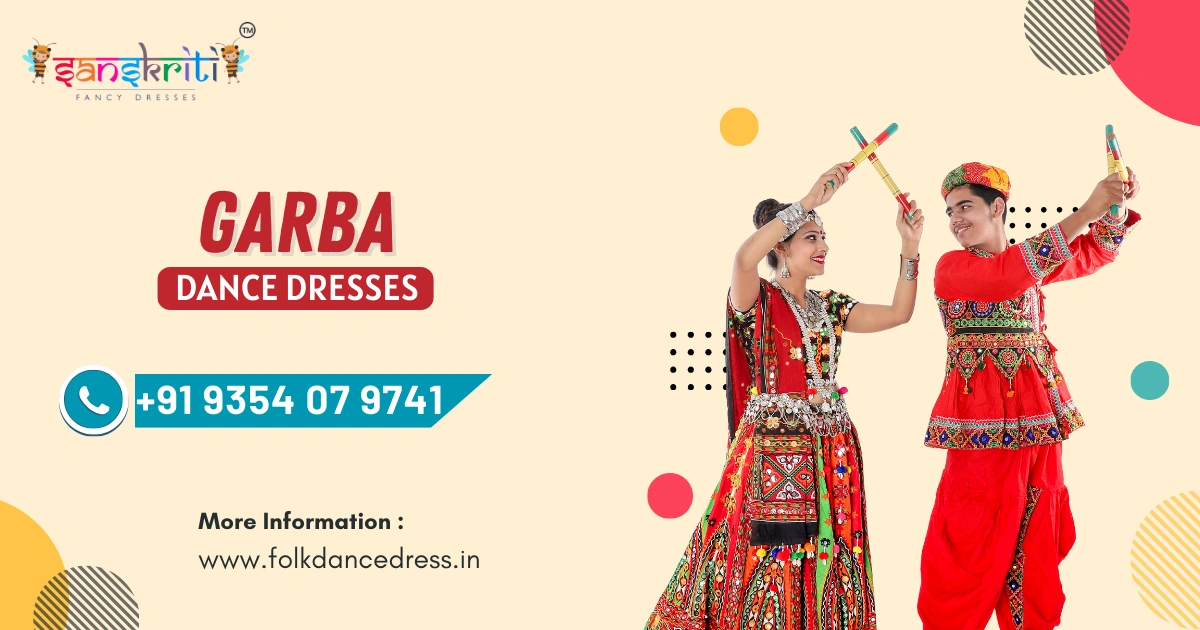
Garba dance dress is a bright and lively costume worn during Navratri and other festive celebrations in Gujarat. The most common outfit for girls is the chaniya choli. This has a flared skirt called the chaniya, a fitted blouse called the choli, and a long dupatta or odhni draped over the shoulder. For boys, the kediyu or short flared kurta with a dhoti or churidar and a colorful pagdi is traditional.
Garba dresses are known for their mirror work, embroidery, and bold colors. Red, green, yellow and royal blue are popular because they look beautiful while dancers spin and move. The embellishments reflect the light, causing every twist and turn to gleam. The fabrics for performance costumes are standard cotton or lightweight silk, to keep the dancers comfortable while their feet perpetually dance the steps.
Accessories round out the costume. The girls wear/bead/metal bangles, ankle-bells, necklaces and jhumkas. The boys may wear a turban and waistcoat. Simple footwear or soft dance slippers help the dancer move safely and comfortably. In many instances, the costumes are hand made by family or local artisans. This keeps traditional skills alive and adds a personal touch to each dress.
A well chosen Garba dress does more than look pretty. It helps the dancer move freely, shows regional craft and culture, and brings people together in joyful celebration. Whether for a school event or a city Garba night, the right costume makes the dance feel festive, warm and full of life.
Importance of Garba Dress in Garba and Navratri
Garba dress is important for making Garba and Navratri lively, joyful, and culturally rich. It is more than just clothing; it is a symbol of tradition, devotion, and celebration.
Why the Garba dress matters:
- The chaniya choli and kediyu showcase the traditional art, embroidery, and mirror work of Gujarat.
- Flared skirts and lightweight fabrics make spinning movements look beautiful and rhythmic.
- Bright colors, mirror work, and ornaments reflect light and bring a lively atmosphere.
- Wearing traditional outfits helps dancers feel linked to the cultural and spiritual essence of Navratri.
- When groups wear matching costumes, it creates harmony and visual appeal during circular Garba formations.
Types of Garba Dance Dresses for Women
Garba dance dresses for women come in many beautiful styles, each designed to highlight movement, color, and tradition. Here are the most popular types:
| Type of Dress | Description | Best For |
|---|---|---|
| Chaniya Choli (Traditional) | Flared skirt, fitted choli, and dupatta, decorated with mirror work, beads, embroidery, shells, and bright prints. | Navratri nights, traditional Garba events, cultural programs |
| Lehenga Choli | Stylish lehenga with embroidered or printed choli, modern look with lighter fabrics. | Festivals, youth Garba groups, semi-traditional events |
| Fusion Garba Dress | Indo-western styles like crop top + lehenga, jackets, printed skirts, mix-and-match designs. | College Garba, modern Navratri celebrations, theme-based events |
| Simple School Garba Dress | Lightweight cotton skirt with matching blouse/dupatta; minimal embroidery for comfort. | School Garba competitions, kids’ events, budget-friendly celebrations |
Types of Garba Dance Dresses for Men
Men’s Garba Dress are colorful, comfortable, and designed to match the energetic steps of Garba and Dandiya Raas. Here are the main types of Garba dance dresses for men:
| Type of Dress | Description | Best For |
|---|---|---|
| Kediyu & Dhoti | Traditional Gujarati outfit with a flared, embroidered kurta (kediyu) paired with dhoti. Often decorated with mirror work and tassels. | Traditional Garba, Navratri nights, cultural shows |
| Kediyu & Churidar | Similar kediyu paired with tight-fitting churidar for easy movement. More structured and polished look. | Modern Garba events, stage performances |
| Kurta & Kafni Pajama | Lightweight kurta worn with kafni pajama (loose-fit bottom). Comfortable for long dance rounds. | Casual Garba events, school or college Garba |
| Indo-Western Fusion Dress | Mix of embroidered jackets, short kurtas, and printed dhotis or pants. Stylish, trendy, and youth-friendly. | College Garba, theme nights, modern Navratri |
| Simple Garba Dress for Boys | Plain kurta with dhoti or pajama. Minimal embroidery for comfort. | School Garba competition, kids’ Navratri celebrations |
Key Features of Garba Dance Dress
Garba dance dress is colorful, comfortable, and certainly eye-catching. The key features of Garba dance costumes enhance and highlight the fast, spinning, and rhythmic movements that give Garba dance such a lively and wonderful sense of joy as you dance. Here is a list of the main features of Garba dance costumes:
- Bright Colors: Garba costumes often come in bright red, green, yellow, blue, and orange colors, and stand out during the circular dance formations, evoking more of the festive spirit.
- Mirror Work: Small reflective mirrors sewn into the garment catch the light when the dancers spin. This is one of the most iconic features of Gujarati Garba attire.
- Embroidery and Patterns: Traditional bright embroidery, or embellishments like patchwork, beadwork, or some form of Kutchi embroidery, enhance the fabric much like traditional costumes would.
- Flared Shapes: Women wear a chaniya choli with large, flared skirts that quickly spin during the dance. Men wear kediyus which have a slight flair for comfort and flare.
- Lightweight Fabrics: Garba costumes do not need to be heavy cotton, rayon, or light silk fabrics so dancers remain comfortable dancing for more than an hour.
- Coordinated Accessories: Accessories, like dupattas, waist belts, turbans, or jewelry are also part of the costume and help balance the overall look.
Accessories for Garba Dance
Accessories are an important part of the Garba look, it helps to add sparkle, movement, and cultural depth to the dance. Both men and women wear accessories to enhance their traditional dress and dance movements.
Female Accessories for Garba Dance
- Jewelry sets: Each jewelry set consists of a necklace set, jhumkas (earrings), bangles, and anklets, jewelry that creates shine and movement when worn.
- Ghungroos: Ghungroos are bells located on the ankle that create a rhythmic sound through movement while dancing.
- Dupatta/Odhni: A dupatta or odhni is decorated with mirror work or colours that is usually draped across or on the shoulder or the head.
- Hair Accessories: Flowers, decorative clips, parandas, and maang tikka to highlight festive styling.
- Kamarbandh: A waist belt that helps secure the dupatta and adds elegance.
Male Accessories for Garba Dance
- Pagdi: To complete the traditional Gujarati costume, a pagdi/turban is worn and is brightly colored.Waistcoats: Waistcoats are colorful jackets that are worn over a kurta and/or kediyu that have embroidery or mirror work.Scarves/Feto: Scarves/feto are placed at the waist or shoulders to add style.
- Traditional Jewelry: Some men like to accessorize their garments with a simple necklace or kada (bracelet) or earring.
Renting vs Buying Garba Dance Dress
Choosing between renting and buying a Garba dance dress depends on your budget, how often you will use the outfit, and the type of event. Both options have their own benefits.
| Aspect | Renting Garba Dress | Buying Garba Dress |
|---|---|---|
| Cost | Budget-friendly for one-time use | Higher cost, especially for heavy or silk outfits |
| Variety | Wide range of styles and sizes available | Limited to what you buy or custom-stitch |
| Convenience | No stitching, maintenance, or storage needed | Requires fitting, stitching, and care |
| Usage | Best for occasional or single-day events | Ideal for repeated use during Navratri or performances |
| Fit & Comfort | May not fit perfectly; altered options limited | Custom fit ensures comfort and ease of movement |
| Appearance | May not look brand new | Fully new outfit with fresh embroidery and colors |
| Customization | No customization possible | Choose your own design, color, patterns, and accessories |
| Long-term Value | Short-term solution | Can be reused, shared, or gifted later |
Conclusion
Garba dance dress is much more than festive clothing. It celebrates Gujarat’s rich culture through vibrant colours, mirror work, embroidery, and traditional craftsmanship. Whether it is a classic chaniya choli, a traditional kediyu, or a modern fusion outfit, each dress adds beauty, rhythm, and energy to the dance. These costumes help dancers move freely, feel confident, and stay connected to the cultural spirit of Navratri. From adults to kids, the right Garba outfit enhances the joy of every spin, clap, and step. Wearing these traditional dresses keeps regional art alive and makes Garba celebrations truly memorable and meaningful.
Frequently Ask Questions
Q. What is a Garba dance dress?
A. A Garba dance dress is an ethnic outfit for Garba and Navratri festivals. For women, it is typically a chaniya choli. For men, it is typically a kediyu with dhoti or churidar.
Q. What fabrics can I expect at Garba?
A. Cotton, rayon, silk, georgette, and chiffon are typically made from lightweight, breathable, and comfortable materials suitable for dancing.
Q. What accessories are worn with Garba dress?
A. For women, options include bangles, jhumkas, necklaces, ghungroos, and unique dupattas. For men, options include turbans, scarves, and jackets that are embroidered.
Q. Are Garba dresses different throughout Gujarat?
A. Styles vary between regions. Traditional Garba outfits from Saurashtra are different than Kutch or Kathiawad. Each has its unique embroidery, colors, and patterns.
Q. Is it best to rent or buy a Garba dress?
A. Renting a Garba dress is more cost effective for a one-time use, while buying a Garba dress is the best option if you are going to dance for multiple days, or want a custom fit.
Q. What colors should I wear for Garba?
A. Bright colors like red, yellow, green, orange, and blue look lively and go well with the festive mood of Navratri.
Q. What shoes do I wear for Garba?
A. Soft juttis, Kolhapuri or flat shoes will work best for comfort and safety.You can wear them for hours and feel good dancing into the night. Cognizant of comfort and safety should be your priority.
