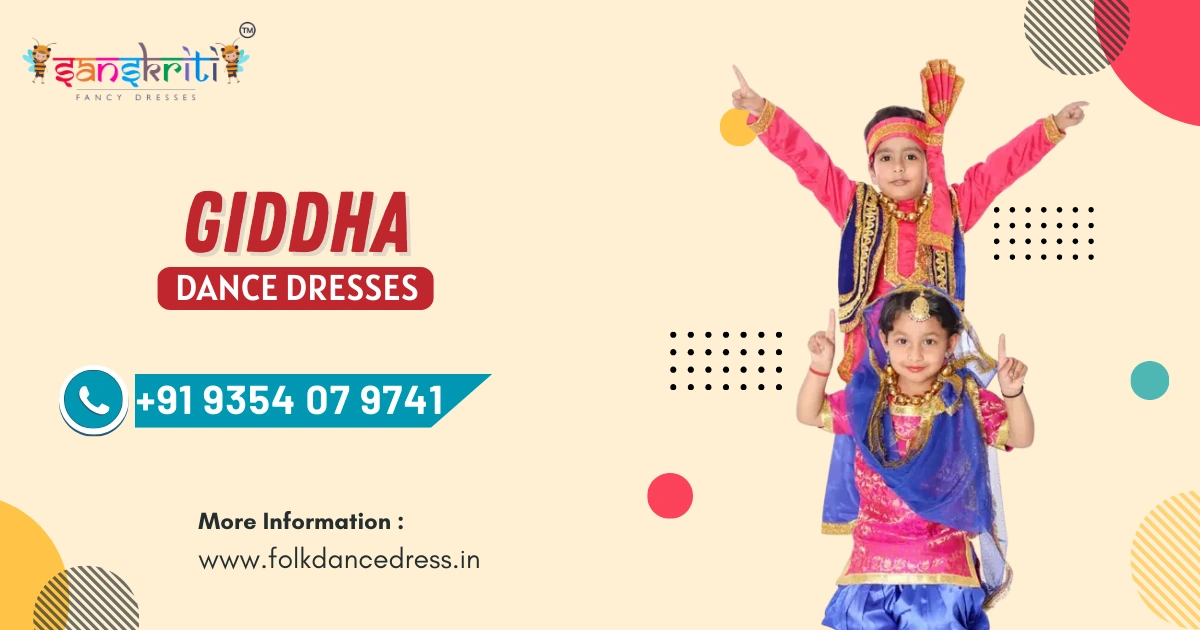
Giddha Dance Dress has the true culture of Punjab and is filled with the vibrancy, grace and authenticity of one of the most festive folk dances in North India. Giddha, which is a women’s dance form, is noted for its rhythmic claps, hand movements and singing (boliyaan) to tell the stories of their daily lives, celebrations and the spirit of community. The costumes that are used for the Giddha dance are not simply clothing; rather, they provide an artistic element of beauty to each of the dancers.
A traditional Punjabi costume consisting of a bright salwar kameez set, stunningly embroidered dupattas, authentic Punjabi traditional jewellery and a signature ‘Paranda’ that weaves through the hair creates a look that is not only recognisable but also rooted in cultural heritage. The “Giddha Dance Dress” can be worn during festivals, cultural events, performances at school or as part of a fancy dress competition; it adds grace, charm, and cultural authenticity to a performance.
In this blog post, we will examine each of the components of the Giddha costume including the essential garments and accessories, as well as modern takes, styles and practical advice for parents, teachers and performers. This guide will help you to better understand the beauty and significance of the iconic Giddha Dance Dress and its continuing appeal throughout time.
What is Giddha Dance?
Punjabi Giddha Dance is a representative folk dance that is mainly performed by female dancers celebrating joy, togetherness and the vast cultural diversity of Punjab, India. Giddha Dance has developed into one of North India’s most energetic and expressive dance styles and is characterized by its rhythmic clapping, graceful body movements and lively boliyan (folk couplets). Boliyan typically contain playful stories, feelings and references related to everyday life.
In contrast to other forms of dance which have a defined structure, Giddha relies on improvisation. During a performance, dancers form a circle and respond to one another with verses of songs while dancing and coordinating their steps based on a rhythmic clapping pattern. All movements within Giddha emphasize femininity, beauty and celebrate the abundant spirit of Punjabi Female dancers.
Giddha Dance is commonly performed during Festivals, Weddings, Harvest Festivals, Cultural Events and similar occasions, and not only serves as a form of distraction, but provides an opportunity for participants to use Giddha Dance as a medium to express humour, societal messages, Cultural Values, and Sisterly Bonds; and through Giddha both celebrate and document the joyousness and cultural significance of Love, Family, Village Life, and Friendship.
Elements of the Giddha Dance Dress
Giddha Dance Dress is a beautiful blend of traditional Punjabi fashion, vibrant colours, and graceful accessories. Every component of the costume is chosen not just for aesthetics, but to enhance the dancer’s charm, fluidity, and cultural authenticity. Below are the essential elements that make up this iconic folk dance outfit:
1. Kameez (Upper Garment)
The kameez is a long, elegant top usually bright and richly coloured. It is typically adorned with delicate embroidery, phulkari-inspired designs, gota borders, or mirror work. The kameez provides comfort and full movement, allowing the dancer to clap, turn, and gesture freely while maintaining a traditional silhouette.
2. Salwar (Bottom Garment)
The salwar is a loose, pleated bottom that tapers at the ankles.Its roomy structure makes it perfect for dance movements, adding flair during turns and rhythmic claps.Traditionally, the salwar may contrast or complement the colour of the kameez, creating a visually striking ensemble.
3. Dupatta or Chunni
Giddha dress includes a flourishing dupatta, which is typically designed with phalkari embroidery, tassellations, blinking borders, and many embellishments. Thus, when performing, the performers, i.e., the dancers, will utilize the dupatta as a means to enhance their graceful posture and elegant appearance. The dancers can hold their dupattas in their hands and/or rotate them in the air at specific points of a step and/or boliyan to further accentuate their performance and the audience’s perception of their performance, making the dupatta an important visual element of the performance.
4. Phulkari Embellishments
Phulkari, the traditional embroidery of Punjab, is frequently incorporated into the dupatta or kameez. Its colorful floral patterns bring a festive feel to the attire and reflect the rich textile heritage of the region. Whether lightly or heavily embroidered, phulkari instantly elevates the authenticity of the costume.
5. Traditional Jewellery
Jewelry enhances the visual appeal of dancers while completing their style with added sparkle.The four main accoutrements are Jhumke (or earrings), Raani Haar or choker (neck jewelry), Tikka or maang tikka (forehead ornament), and Choodiyan (glass/metall bangles). These adornments increase visibility of dancers’ hand movements and facial expressions, contributing IT the stage presence.
6. Paranda (hair accessory)
A colourful paranda braided into hair with tassel embellishments and commonly used in Giddha, is a must for completing the Giddha outfit.The paranda will sway with each of the dancer’s movements creating beautiful motions and adding rhythm and a unique Punjabi flair to a dancer’s overall look.
7. Punjabi Jutti (footwear)
Punjabi juttis, flat-soled shoes made in various styles and colours, are traditional shoes that dancers wear. They provide comfortable support and are flexible sufficient to provide the traditional essence when finishing any dancer’s outfit. For younger dancers or school performances, lightweight alternative options may be utilized.
8. Makeup and Styling
Giddha makeup is kept vibrant yet elegant. Kohl-lined eyes, a bindi, and subtle lip colours help emphasize expressions. Hair is neatly braided, often with flowers or jewellery pieces complementing the paranda.
Giddha Fancy Dress for School & Event
Giddha fancy dress is a favorite for kids annual days, school functions, cultural events, and theme-based fancy dress competitions. With its bright and bold colours and elegant clothing that’s festive in nature, it’s not only visually appealing but also easy for children to wear. A giddha ensemble adds brightness, excitement, and cultural authenticity to the stage, whether to showcase Punjabi culture or perform a short folk dance piece.
1. Easy & Comfortable Costume for Kids
Comfort is of utmost importance when it comes to dressing children for school events. A typical Giddha costume will contain:
- An bright and colourful salwar kameez
- Lightweight Phulkari dupatta
- Easy-to-wear jewellery
- Simple braid with small paranda
Light-weight fabrics i.e.cotton blended or georgette material is best to achieve the ultimate comfort levels for kids.
2. Key Elements for Authenticity
Costumes representing Giddha must include:
- Brightly colored dupattas with borders;
- Traditional jutti shoes (or soft flat shoes);
- Jhumka earrings (which are traditional to India);
- Traditional festive maang tikkas;
- Parandas (which are traditionally Punjabi hair decorations).
Include additional culturally traditional items as bright bindis and bangles.
3. Stage-Friendly Styling Tips
Below are recommended styling details that will help children look and perform their best on stage and at school annual functions.
- When selecting a costume, select bright colors such as pink, yellow/mustard, greens, or blue to enhance visibility and presence on stage (i.e. under the lights of the school stage).
- Choose lightweight accessories that won’t impede children’s ability to carry out their physical performance (i.e. dancing) comfortably.
- Select short salwar (pants) so that children do not trip over the pants in their performance.
- Select safe and easy-to-apply soft skin-type makeup to emphasize facial expressions but not be heavy in appearance.
By implementing these recommendations, parents and teachers can assist children in appearing vibrant, excited, and camera-ready for school events.
4. Quick Fancy Dress Idea for Last-Minute Events
If you’re looking to create a beautiful Giddha look with limited time:
- Simply look for a bright salwar kameez that your child has already owned before and use it.
- Borrow or quickly embellish a decorative dupatta from home with some lace or other trims
- Use any simple home jewellery
- Use a colourful ribbon or tassel for a DIY version of paranda.
So Giddha can be one of the easiest costumes to put together on short notice.
Buying vs Renting a Giddha Dance Dress
When deciding whether to purchase or rent a Giddha Dance Dress, you should think about a few factors: the use, your budget, and how often you intend to wear this particular costume
There are pros and cons to both choices for you as a parent, teacher, or performer to understand in order to make an informed decision about purchasing or renting a Giddha Dance Dress for your educational event (e.g. school festival, cultural program, or dance competition).
1. Buying a Giddha Dance Dress
Purchasing a Giddha costume is ideal when you need long-term use or want a customized and perfectly fitted outfit.
Benefits of Buying:
- Perfect Fit: Getting the dress stitched or buying the right size ensures comfort and confidence during performance.Higher Durability: Purchased costumes tend to be better stitched and made to last through multiple wears.
- Customization Options: You can choose your preferred colours, embroidery, jewellery style, and accessories that suit your theme or performance.
- Hygiene Assurance: Since it’s brand new, there’s no worry about previous usage or cleanliness.
Best For Dance academies, Annual school programs, Repeated stage performances and Families who participate regularly in cultural events
2. Renting a Giddha Dance Dress
Renting is a popular option for one-time events, quick fancy dress competitions, or occasions where a full costume isn’t needed more than once.
Benefits of Renting:
- Budget-Friendly: Renting costs a fraction of buying, making it ideal for short-term use.
- Convenient: Ready-made sets include the complete outfit—salwar kameez, dupatta, jewellery, and often a paranda.
- Quick Solution: Perfect for last-minute school events, fancy dress competitions, or festival performances.
- Variety of Styles: Rental shops often keep multiple colours and designs, allowing you to choose something that matches your event theme.
Best For One-day school functions, Fancy dress competitions, Parents looking for affordable cultural costumes and Occasional performers.
Frequently Ask Questions
Q. What are some of the Characteristics of Giddha Dance Dresses?
A. Women wear colourful, traditional dresses to perform during the Punjabi folk dance named Giddha. The Giddha Dance Dress is usually composed of a salwar kameez, a phulkari or embroidered dupatta, the wearing of traditional jewellery and paranda, and wearing Punjabi jutti shoes.
Q. What Colours are Common when Making Giddha Costumes?
A. Bright festive colours are often used for Giddha Dance Dresses. Pink, mustard, green, blue, orange, red and magenta are amongst the most popular colours used for Giddha Dance Dresses. Giddha Dance costumes also usually include contrasting colour combinations which create a strong visual impact onstage.
Q. Which Fabrics are Best for Making Giddha Dance Dresses?
A. When creating Giddha Dance Dresses, it is essential to use lightweight, comfortable fabrics like cotton, cotton blends, georgette, chiffon, silk and art. For school performances, the best selection of Giddha Dance Dress material would be either breathable cotton or georgette.
Q. Can children wear Giddha Fancy Dress for school events?
A. Giddha Fancy Dress is a popular and comfortable choice for school programs, annual days, fancy dress competitions, and cultural events. Child-friendly versions use lighter fabrics and minimal accessories.
Q. What are the different types of jewellery worn with the Giddha Dance Dress?
A. Performers typically wear jhumke, raani haar or chokers, maang tikka, bangles and sometimes small nose rings. The jewellery worn with the giddha dance dress should be light and complement the dress you are wearing.
Q. Is it better to purchase or rent a Giddha costume?
A. If you will use your giddha costume for multiple performances such as dance academies, or at annual events or festival, then it is a good idea to purchase one. Renting a giddha costume is more economical if it is only for a one-time school function or a fancy-dress event.
Q. What kind of footwear should be worn while performing Giddha Dance?
A. Traditional Punjabi juttis are the best options for Giddha Dance footwear. They are flat, comfortable, and they also go very well with the traditional Punjabi dress. For younger children, you may also consider using soft-soled alternatives.
