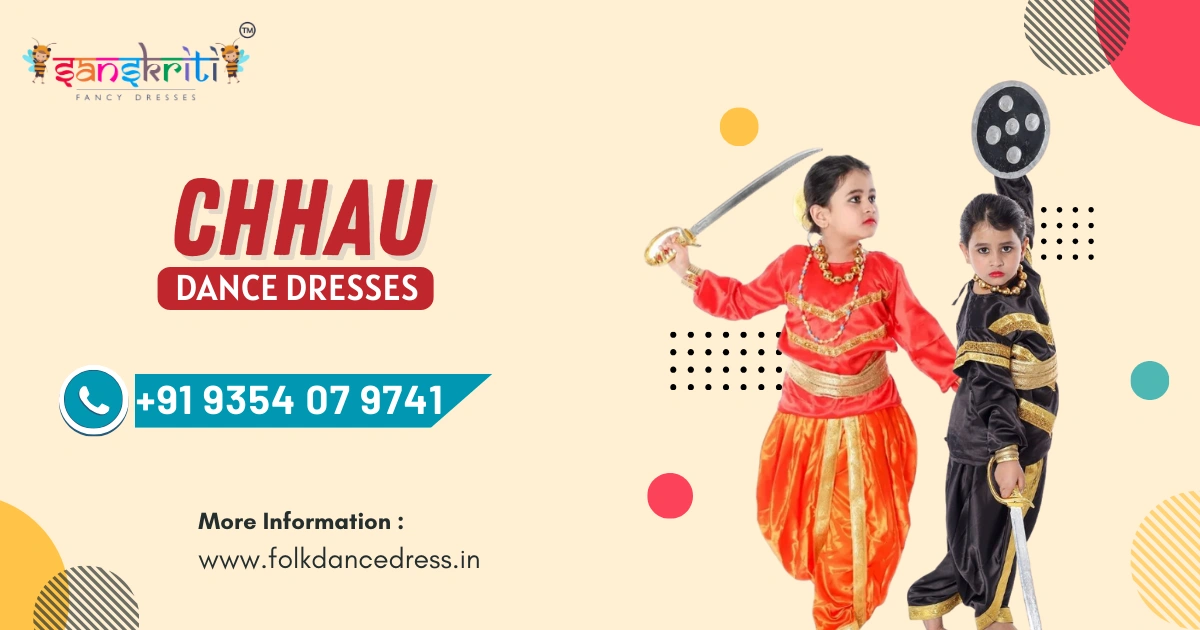
Chhau Dance Dress is very vibrant and full of dramatic flair. It is one of the important elements that contributes to the Chhau Dance, which originates from the states of West Bengal, Odisha and Jharkhand. By wearing a dependent costume based on the characters represented in the dance, be they gods, warriors or animals, performers use the costume to depict these characters through the movement, energy and emotion associated with the dancer’s physicality as they perform every powerful step of their Chhau Dance routine.
The costumes are often created in bright colours and include lots of reflective materials so that they can be easily seen. In addition, they include many intricate designs and traditional patterns that help the audience identify who the character is. A mask is also used in many of the different styles of Chhau Dance to further enhance the overall presentation of the performance.
Whether you are watching a performance for an outdoor festival, a concert or a school assembly, the Chhau Dance Dress will always be something you remember. It is a great representation of the cultural and artistic richness of this wonderful type of folk dance, as well as the story-telling component of it.
What is Chhau Dance?
Chhau Dance is a form of traditional folk dance prevalent in the Indian states of West Bengal, Odisha, and Jharkhand. The dance features vigorous movements, high leaps, and draws on mythological narratives and natural themes as well as rural life.
There are three types of Chhau dance such as Purulia, Mayurbhanj, and Seraikella. Each has its own set of steps, music, and costumes. Of these, Purulia and Seraikella employ masks while the Mayurbhanj version does not.
Chhau dancers emphasize dynamic movements, quick footwork, and expressive bodily motions. The dramatic style lends a sense of grandeur to performances. In addition, colourful costumes and masks add excitement and enjoyment to audience members watching performances live.
As part of India’s rich cultural heritage, many people enjoy watching and performing Chhau regardless of age.
Types of Chhau Dance
Chhau Dance consists of 3 different styles. These styles are all from different part of India and have their own look, steps and costume.
1. The Purulia Chhau (West Bengal) – It is the most colourful and dramatic style of Chhau Dance. The dancers will wear large colorful bright masks (which have large eyes) with many detail on them. The Chhau Dance movements consist mainly of large jumps and powerful movements. The dances are normally based on themes from the Ramayana, Mahabharata and folk tales of the area.
2. The Mayurbhanj Chhau (Odisha) – The Mayurbhanj Chhau does not use masks. Instead the dancers use their body movements and expressions on their faces to express their feelings. The steps in the Mayurbhanj Chhau Dance are graceful, yet powerful. The costume of the dancers is much lighter than that of the dancers in the Purulia Chhau.
3. The Seraikella Chhau (Jharkhand) – This style uses smaller and simpler masks. The dancers have soft, balanced and elegant movements. In this style of Chhau Dance, the dancers concentrate much more on the emotion and story than on the large jumps.
These three styles make Chhau Dance unique and rich, bringing each its own flair and beauty to the stage.
Cultural Meaning Behind Chhau Costumes
Chhau costumes are more than just costume. They carry deep cultural meaning and help tell stories through the dance. Each part of the costume shows the tradition, beliefs and artistic skills of the regions where Chhau is performed.
The bright colours in the dress show joy, strength and celebration. Red, yellow, blue and green are used to give life to the dance characters. These colours also match the festive mood of Chhau performances.
Characters depicted in Chhau often originate from ancient tales of deities, demons, and heroes. The costume worn by each character directly corresponds to their characterisation, e.g., a warrior is depicted in an armoured-type outfit, while a god would wear a costume that glows brightly, with intricate artwork detailing.
Masks, used in Purulia and Seraikella Chhau, have a strong cultural value. They show the nature of the character. A calm mask is used for a god, while a fierce mask is used for a demon. These masks are hand-painted and made by skilled local artists, keeping the craft alive.
Patterns, colours, and designs in Chhau costumes are based on nature, mythology, and traditional handicrafts from local villages. As a result, they provide a visual understanding of the events being portrayed through dance without requiring spoken language.
Main parts of the Chhau dress
The dress worn by the Chhau dance is colourful, mixture of bright and bold colours, and designed to complement the vigorous and strong movements of this performance. Each piece of clothing has its purpose in completing the costume and in helping to present the performer as a character. The following are the main elements of the costume:
1. Costume Body Suit
- A costume body suit is often the first item worn to create a fitted look that supports the decorative elements of the Chhau costume.
- The colour of this base layer is determined by the character being portrayed.
2. Chest Piece Shaped Like An Armoured Shield
- In the Chhau dance, many performers will be seen wearing a decorative piece of clothing across the chest made from cloth, cane, leather or light material.
- This creates a strong appearance that supports the character being portrayed in a warrior or hero role.
3. Skirt Or Lower Garment
- A full skirt that is either fitted or layered with a bottom layer will be worn around the waist by all Chhau dancers.
- This garment will be loose-fitting around the legs, allowing free movement when dancing, jumping and performing.
- The colour scheme of the skirt will be bright and match that of the top of the costume.
4. Decorative Arm And Shoulder Pieces
- Large and colourful decorative pieces on the arms and shoulders will create a regal appearance for the dancer, and will be made from various materials, including cardboard, cloth and straw.
- They will be decorated with shiny, colourful paper and patterns.
5. Decorative Arm And Leg Warmers
- The dancers arms and legs are fitted with decorative arm and leg coverings, which will complement the overall costume and create a polished appearance.
6. Mask (for Purulia and Seraikella styles)
- Masks are the most important part in these two styles.
- They show the face of the character and are beautifully painted.
- Each mask is handmade by skilled artisans.
7. Footwear
- Most dancers perform barefoot for good grip and balance during jumps.
These parts come together to create the strong, dramatic and colourful look that makes Chhau dance so special.
Armour-style costumes and their purpose
The armour costumes used in Chhau dance are an important part of the overall costume for Chhau dancers, giving the dancer a strong, heroic appearance. The idea for the costume comes from ideas of warriors, kings, mythological persons.
1. What the armour looks like
The armour consists of a piece of clothing placed on the chest area (sometimes over the shoulders) and is made of light-weight materials. When looking up, it is composed of a variety of bright colours and employs shiny paper for its decor, in addition to following traditional designs.
2. Why the armour is used
The Chhau dance has many very vigorous dance movements with lots of jumps and battle-like actions. The use of armour displays the strength of the character within the dance; it makes the dancer appear confident and ready for action.
3. Represents the story through the movement of the dance
The Chhau dance many times uses the idea of mythical battle as the basis for the stories. The fact that when a dancer wears the armour, it assists the viewer to identify the role of the dancer without the need for words.
4. It makes the overall dance performance seem grand
The armour adds to the size, colour and shape of the look of the costume, allowing the performer to have a big presence on stage and making the performance seem dramatic.
5. Light but durable
Although it looks heavy, it is light, yet strong enough to allow the dancer to move easily
Even though the costume may appear to be heavy, it is intended to have a light weight so that the dancer can easily jump, bend and perform movements with good speed.
Frequently Ask Questions
Q. What is a Chhau Dance Costume?
A. Chhau dance costumes can be described as the traditional outfit of this type of dance found in the eastern states of India (West Bengal, Odisha and Jharkhand). Chhau dresses consist of armoured pieces, colourful skirts and other accessories. The different styles of Chhau dance produced by each state produce different styles of costumes; therefore, depending on your location, you will find slight variations between the styles.
Q. Are all styles of Chhau dance worn with masks?
A. Purulia and Seraikella Chhau wear masks, whereas Mayurbhanj Chhau is performed without masks.
Q. Why are Chhau Dance Costumes so Colourful?
A. Chhau costumes contain many bright, vivid colours that are chosen to represent the character’s strength and to aid in the storytelling process to the audience.
Q. What Materials are used to Create a Chhau Dance Costume?
A. There are many materials that can be used to create a Chhau costume, including cloth, cardboard, cane, leather and reflective papers.
Q. What is the purpose of the armour-style costume?
A. It gives a strong and heroic look and matches the dance’s powerful movements.
Q. Are Chhau masks heavy?
A. Most masks are light. They are made from paper, clay and cloth so dancers can move easily.
Q. Do kids wear Chhau costumes for school events?
A. Lighter and simpler versions are used for school programs.
Q. Should I buy or rent a Chhau costume?
A. Buy if you need it many times. Rent if it is for a single event.
Sapna Kumari is the founder of Sanskriti Fancy Dresses (Since 2018) and a dance teacher who has been closely associated with school cultural programs and stage performances.
Through her work with schools, teachers and parents, she has gained practical experience in planning costumes for annual functions, folk dance performances and fancy dress competitions.
She writes about school costume planning, folk dance dresses and cultural event preparation to help teachers and parents organize stage performances smoothly.
Sapna Kumari has been actively working in the field of school event costumes and cultural performances.
Her experience includes:
costume planning for school annual functions
folk dance costumes for stage performances
fancy dress competition preparation
bulk costume coordination for school events
Through Sanskriti Fancy Dresses, she works closely with teachers, dance instructors and event coordinators to help them arrange costumes efficiently for school programs.