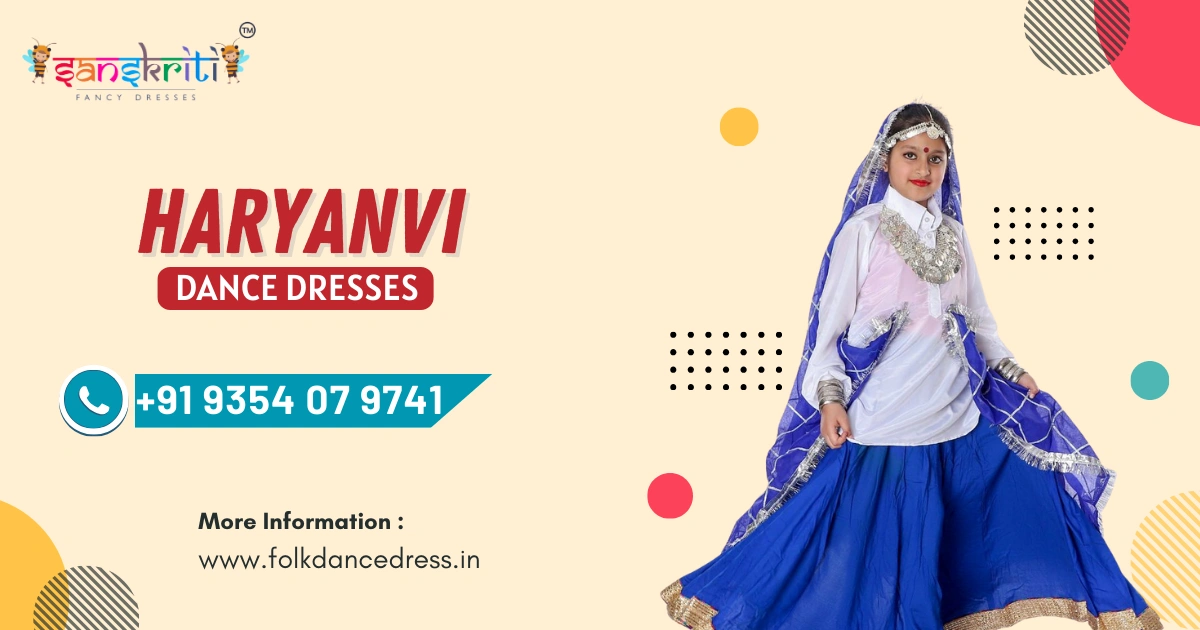
Haryanvi Dance Dress is bright, traditional and full of charm. It reflects the simple and strong culture of Haryana. The dress is designed to look beautiful on stage and also give the dancer free movement for folk steps. Haryanvi dances like Ghoomar, Khoria and Dhamal look even more lively when the performers wear this colourful outfit.
The ghagra, kurti and odhni create the classic look that everyone easily recognises. Jewellery, braid, and footwear don’t just finish the look—they really bring out the beauty of the costume. No matter if it’s a school event, a festival, or a cultural show, the Haryanvi Dance Dress always carries that special mix of grace and tradition.
Let’s break down each part of the costume, the colors, the fabrics, and a few quick tips to help you pick the right one.
What is Haryanvi Dance?
Haryanvi dance bursts with life. It’s not just one dance, but a whole bunch of folk styles from Haryana that capture the spirit of the people on how they live, what makes them happy, and what they celebrate. You’ll mostly see women taking the lead with dances like Ghoomar, Khoria, and Jhumar. Men jump in with Dhamal and other energetic moves.
The steps aren’t complicated, but they pack a real punch. Dancers usually team up, moving in sync to the beat of old-school instruments. These dances pull everyone together at festivals, weddings, or just any big gathering in the village. For folks in Haryana, this isn’t just entertainment. It’s something they’re genuinely proud of, a real symbol of who they are.
Types of Haryanvi Dance
Haryana’s traditional dances show the joy of living in the state as well as their culture through dance forms and styles. The following are a few of the best-known types of traditional dances from Haryana:
- Ghoomar – A traditional feminine dance that is gentle and flowing with hand movements and slow turns to accompany the weight of the dancer.
- Khoria – A dance known for its energy. Women will gather into a circle and perform the harvest dance with fast movements, clapping and lots of energy.
- Jhumar – A traditional and soft dance. The movements are elegant and simple. This dance is often performed at happy events in life.
- Dhamal – A powerful dance performed only by men. The beat is loud, the movement is powerful, and the rhythm is quick. The dance displays strength and unity.
- Phag Dance – A colourful dance performed during the spring festival of Holi. The character of this dance is full of fun and playfulness.
- Loor Dance – A dance performed by young girls in the spring. The steps and expressions are sweet and simple.
These traditional folk dances help to preserve and enrich the culture of Haryana and are a beautiful display of the spirit of the people of Haryana.
Main parts of the Haryanvi dress
The traditional dress of Haryana consists of bright bold colours and traditional patterns made for ease of movement. The main pieces of the traditional Haryanvi dress are:
- Ghaghra: The length of the skirt of the ghaghra should be at least ankle length and should contain flared parts to allow for free, flowing movement as the wearer dances. Ghagras are typically made in very basic prints or bordered motifs that create a traditional style.
- Kurti: It is short (above waist) and styled also allowing for free movement while dancing. As with the ghaghra the kurti will typically have bright bold colours to match the festive appearance.
- Odhni: It is a long dupatta that covers the head or shoulders. It creates a sense of grace and elegance for the dancer in completing the outfit and often will feature either light embroidery or lace on its edges.
- Jewellery: It is a pieces worn with the Haryanvi dress include traditional style, such as the earrings, bangles, nose ring and simple necklace worn by dancers. The jewellery enhances the festive appearance of the dancer.
- Footwear: The traditional footwear worn by Haryanvi women includes flat, comfortable slippers or simple jutti style shoes that offer ease of movement while dancing.
Together, these parts of the traditional Haryanvi dress create the classic Haryanvi appearance that is readily identifiable in folk performances.
Fabrics used in Haryanvi Dance Dress
Haryana has a wide variety of dance clothing that consists of lightweight, breathable fabrics that allow for freedom of movement while performing and are less restrictive than their heavier counterparts.
- A common fabric for dance clothing is cotton; cotton is breathable, and the absorbent properties help to maintain comfort for a long period of time during performance.
- Cotton blends are somewhat stronger than 100% cotton and are generally smoother, easier to clean and hold their shape well after washing.
- Silk blend fabrics create a bright and joyous appearance and are used in many local performances as well as during special cultural programming events.
- Georgette fabric is lightweight, fluid and flows very well with dance; it adds to the overall presentation and graceful movement of the dancer on stage.
- Polyester is typically reserved for the creation of costumes used during school performances and celebrations; they are trendy, colourful and easy to maintain. They also hold up well when laundered often.
These types of materials help create a traditional, comfortable and fluid dress that will be able to perform well and look good during Haryanvi folk dancing.
Haryanvi Dress for Kids and School Events
Haryanvi dress for kids is light, colourful and easy to wear. It is designed to keep children comfortable while they dance or take part in cultural programs. The look is simple but still shows the true style of Haryana.
For most school functions, the outfit usually comes with a soft ghagra, a matching kurti, and a lightweight odhni. The fabrics feel nice on the skin, so kids can jump around or dance without any trouble. Bright colors really make the costume pop on stage.
Accessories are kept simple. Just a few bangles, small earrings, and maybe a tiny bindi. Most kids wear their hair in a braid or a ponytail, keeps things tidy and out of the way.
Teachers and parents prefer ready-made or pre-stitched sets because they are easy to put on. This makes the getting-ready process faster for children. A Haryanvi dress is always a good choice for school functions, fancy dress days and folk dance performances because it looks traditional, neat and joyful.
How to choose the right Haryanvi dress
When selecting a Haryanvi dance dress, the dancer should be able to wear something that feels right and looks good. Here are some guidelines you can follow when selecting your dance dress:
- Use soft material. Use cotton or a cotton mix as they are both light and comfortable.
- Choose your colors wisely. Brightly colored outfits show up on the dance floor. Colors such as red, green, blue, yellow are considered bright.
- Consider the fit of the dress. A properly fitting ghagra will not be too long or too short and allows the arms to move freely.
- Look for basic designs/prints. Small prints and light borders will help keep the dress looking neat. Embroidered dresses may be heavy and uncomfortable to wear.
- Limit your accessories. Only wear small earrings, a couple of bangles and a simple necklace. Having too many accessories can take away from the dancer’s performance.
- Be sure that the dancer is comfortable in the dress. Ask her to walk around, raise her arms, and move her feet. This way, you can see that the dress is easy to move in.
A good Haryanvi dress will look traditional, and be comfortable, allowing the performer to dance confidently.
Frequently Ask Questions
Q. What’s a Haryanvi dance dress?
A. It’s the classic outfit you see in Haryana’s folk dances. Usually, it’s a ghagra (long skirt), a kurti (top), and an odhni (scarf).
Q. Which colours show up the most in Haryanvi costumes?
A. You’ll spot a lot of bright shades such as red, green, blue, pink, yellow. Bold is the vibe.
Q. What fabric works best for a Haryanvi dress?
A. Cotton and cotton blends are the go-to for comfort. For stage performances, people sometimes pick silk blends or georgette to add a bit of shine.
Q. What kind of jewellery goes with a Haryanvi dress?
A. The look stays pretty simple: earrings, bangles, a nose ring, maybe a delicate necklace.
Q. Can kids wear Haryanvi dresses to school events?
A. You’ll often see kids in lighter, simpler versions for cultural programs or fancy dress days at school.
Q. Should I buy or rent a Haryanvi costume?
A. Buy if you need it many times. Rent if it is for a one-time event.
Q. What footwear is used for Haryanvi dance?
A. Flat slippers or jutti that feel comfortable for walking and dancing.
Q. Do boys also wear Haryanvi dance costumes?
A. Boys wear dhoti kurta or simple kurta pajama depending on the dance.
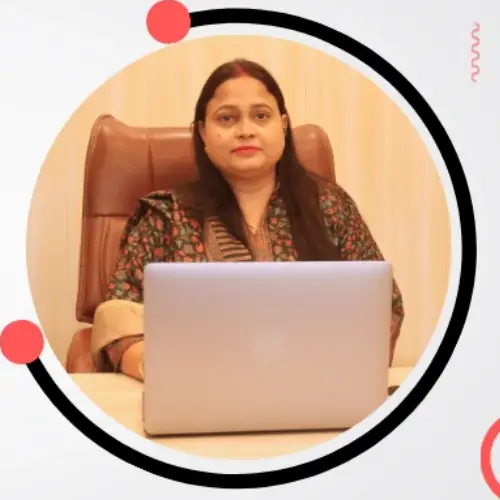
Sapna Kumari is the founder of Sanskriti Fancy Dresses (Since 2018) and a dance teacher who has been closely associated with school cultural programs and stage performances.
Through her work with schools, teachers and parents, she has gained practical experience in planning costumes for annual functions, folk dance performances and fancy dress competitions.
She writes about school costume planning, folk dance dresses and cultural event preparation to help teachers and parents organize stage performances smoothly.
Sapna Kumari has been actively working in the field of school event costumes and cultural performances.
Her experience includes:
costume planning for school annual functions
folk dance costumes for stage performances
fancy dress competition preparation
bulk costume coordination for school events
Through Sanskriti Fancy Dresses, she works closely with teachers, dance instructors and event coordinators to help them arrange costumes efficiently for school programs.